
If Possible: Drop, Cover, and Hold On
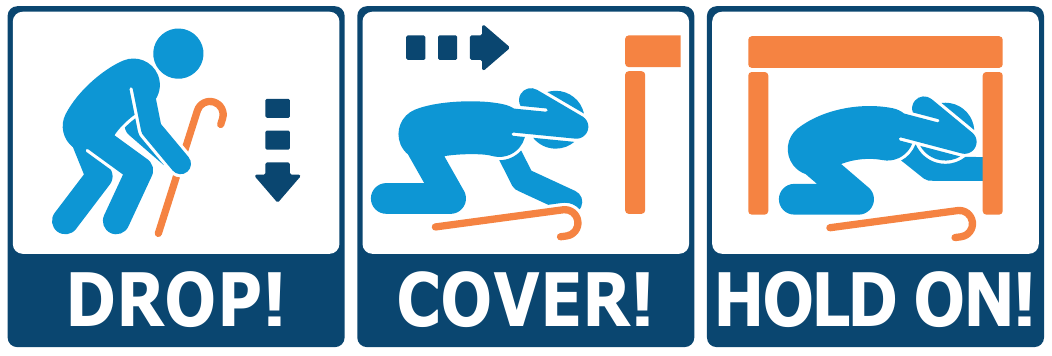
DROP where you are, onto your hands and knees. This position protects you from being knocked down by shaking and reduces your chance of being hit by falling or flying objects.
COVER your head and neck with one arm and hand.
- If a sturdy table or desk is nearby, crawl underneath for shelter.
- If no shelter is nearby, crawl next to an interior wall.
- Stay on your knees; bend over to protect vital organs.
HOLD ON until the shaking stops.
- Under shelter: hold on to it with one hand; be ready to move with your shelter if it shifts.
- No shelter: hold on to your head and neck with both arms and hands.
Or Adapt to Your Situation
If you have difficulty getting onto the ground, or cannot get back up again without help, then follow these recommendations:
- If you are in a recliner or bed: Cover your head and neck with your arms or a pillow until the shaking stops.
- If you use a cane: Drop, Cover, and Hold On, or sit on a chair, bed, etc. and cover your head and neck with both hands. Keep your cane near you so it can be used when the shaking stops.
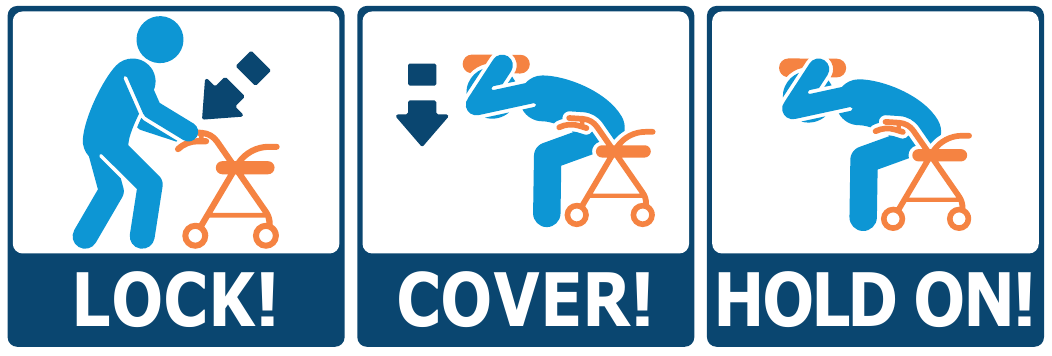
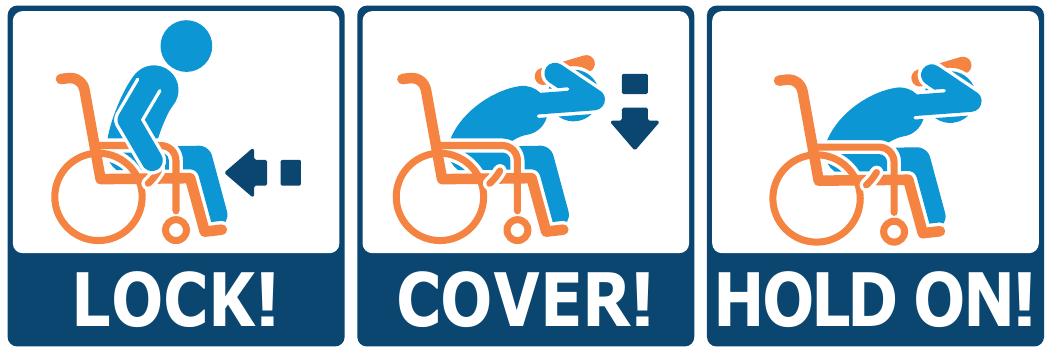
- If you use a walker or wheelchair: LOCK your wheels (if applicable). If using a walker, carefully get as low as possible. Bend over and COVER your head and neck with your arms, a book, or a pillow. Then HOLD ON until the shaking stops.
Learn more at EarthquakeCountry.org/step5.
Tips for Specific Needs
People Who Are Deaf or Hard of Hearing
Prior to an earthquake, identify and test multiple ways to receive warnings and evacuation information.
People Who Are Blind or Have Low Vision
Earthquakes can cause items to fall and furniture to shift. Regular sound clues may not be available afterwards. Move with caution.
People with Developmental, Cognitive, or Intellectual Disabilities
If you have difficulty understanding, remembering, or learning, keep a simple list of what to do and important information with you and in your kits. Practice your plan in advance. If you need help with your communication or use assistive technology, be sure to include this in your plan.
Additional Preparedness Recommendations
- Develop or update your individual and family plans, including your communication plans and important contacts.
- Make emergency go kits: one that you take with you, and perhaps other kits at home and work. Be sure to include batteries, lighting, water, essential personal supplies, and items for service animals and pets too. Your home kit might have more items.
- Label adaptive equipment or other devices with your contact information, and how to handle each item, in case they are separated from you.
- Create safe spaces by securing heavy furniture and other items that could fall, injure you, or block your way out.
- Build a Personal Support Team (PST) to check on you in case you need assistance. Include them in all phases of your planning.
- Get involved! Volunteer with your local Community Emergency Response Team (CERT) or similar organizations in your area.
- If you live near or visit the beach, be aware of tsunami evacuation routes and learn what to do to protect yourself. Practice tsunami evacuations with your care provider or support team.
- Hold drills at home, work, and in your community regularly. Invite your PST and care providers to join you.